The Internet Was Built for Humans. Today's Traffic Is Increasingly Machine-Driven.
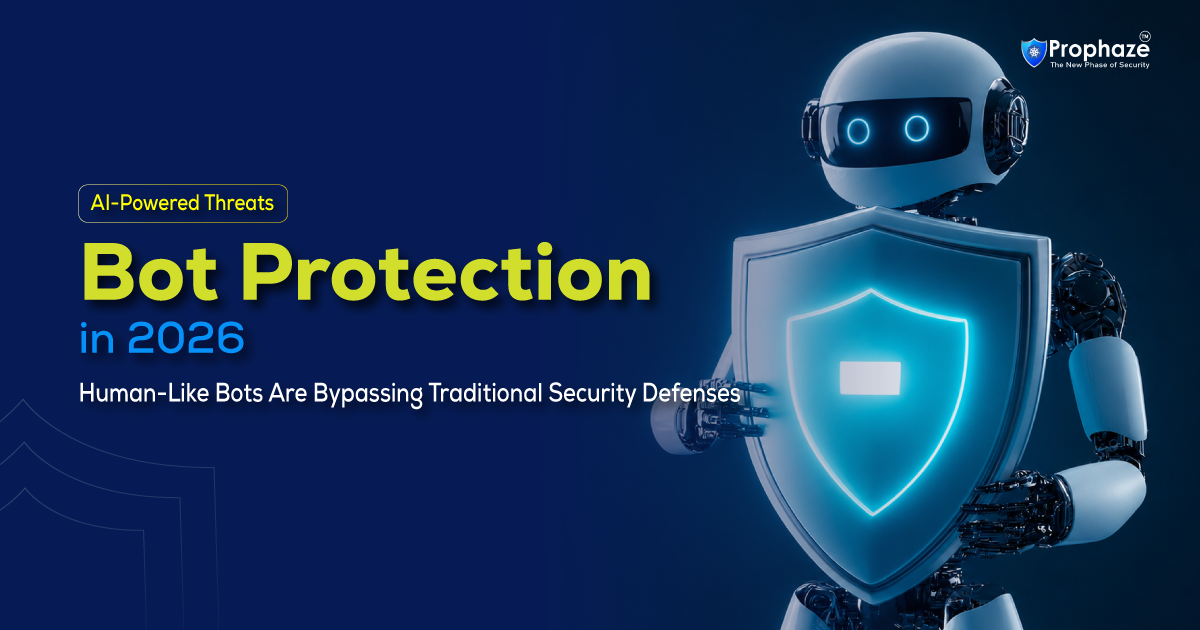
If there is one trend defining bot protection in 2026, it is the rise of human-like bots capable of breaking traditional security defenses. Powered by advances in AI and automation, these bots can evade detection, abuse APIs, and mimic legitimate user behavior with increasing sophistication.
Websites, applications, and APIs were originally built for human users. Today, automated traffic accounts for a significant share of internet activity, driven by AI assistants, autonomous agents, enterprise automation, and machine-to-machine interactions.
While many automated interactions are legitimate, others are used for scraping, fraud, credential attacks, and API abuse. As bots become increasingly human-like, distinguishing trusted automation from malicious activity is becoming one of the biggest challenges in modern application security.
The Rise of Agentic AI, Human-Like Bots, and Agentic AI Security
AI-driven automation is increasingly blending into normal web traffic. These systems now perform tasks like browsing sites, comparing products, summarizing content, and running business workflows, often behaving much like real users.
- Legitimate AI agents and humans often look identical in behavior.
- Agents can operate at massive scale in seconds (hundreds/thousands of pages).
- The same automation used for useful tasks can also enable abuse (scraping, fraud, API attacks).
- Traditional defenses like IP checks and rate limits are no longer effective.
The key shift is that bot management is no longer about separating humans from bots, but about understanding intent and risk in real time. This shift is accelerating adoption of Modern Bot Management Solutions that focus on intent, behavior, and risk rather than simple bot identification.
Human-Like Bots Are Changing the Threat Landscape
Earlier bots were easy to detect due to repetitive patterns and predictable behavior. Today’s bots are far more advanced.
Attackers now use residential proxies, browser automation, AI decision engines, and mobile emulation to mimic real users. These bots can complete full user journeys, maintain sessions, and adapt dynamically to avoid detection.
For example:
- Credential stuffing tools can imitate real login behavior across networks, making Credential Stuffing Protection increasingly important.
- Scrapers use full browser environments to appear legitimate.
- AI agents can test APIs and refine attacks based on responses.
The goal is no longer speed, it is stealth and credibility. The growing sophistication of these threats is making Human-Like Bots Security a strategic priority for organizations that rely on web applications, APIs, and digital customer experiences.
Why Traditional Bot Management Is Struggling
In 2026, Cloudflare reported that bots generated approximately 57.5% of requests to HTML content, highlighting how automated traffic now rivals and often exceeds human activity. At the same time, AI-driven agents are increasingly browsing websites, querying APIs, comparing products, collecting data, and completing tasks autonomously.
The challenge is that modern bots no longer look like bots.
Key Takeaways:
- AI-powered agents increasingly behave like legitimate users.
- An AI shopping assistant and a credential-stuffing bot can generate remarkably similar browsing patterns.
- Legitimate and malicious automation are becoming harder to distinguish.
- Traditional indicators such as IP reputation, rate limits, and signatures are less effective against human-like bots.
- Organizations must identify which bots to trust, which to control, and which to stop.
APIs Have Become a Preferred Target for Automated Abuse
APIs are now one of the most targeted layers for automated attacks. They expose critical functions like authentication, payments, search, and account management making them highly valuable for attackers.
Instead of targeting UI flows, bots directly interact with APIs to:
- Steal credentials
- Perform account enumeration
- Abuse business logic
- Scrape structured data at scale
As API ecosystems grow, visibility gaps are becoming a major security risk.
What Modern Bot Protection Should Look Like
The evolution of automated threats requires a corresponding evolution in Bot Detection and Mitigation strategies. Effective bot mitigation can no longer depend solely on identifying whether traffic is automated, which is why organizations are investing in Advanced Bot Protection Solutions that evaluate intent and behavior. Organizations must understand the intent, behavior, and context behind each interaction.
Modern bot protection platforms should provide:
Behavioral Analytics
Analyzing navigation patterns, interaction characteristics, request sequencing, and behavioral indicators to distinguish genuine users from automation.
Device and Browser Fingerprinting
Identifying inconsistencies associated with automation frameworks, spoofed environments, and synthetic identities.
API-Aware Visibility
Monitoring API activity to detect abnormal consumption patterns, credential abuse, and business logic attacks.
Adaptive Rate Limiting
Applying dynamic controls based on risk and behavior rather than relying exclusively on static thresholds.
Threat Intelligence Correlation
Leveraging global intelligence to identify known bot infrastructure, attack campaigns, and emerging automation techniques.
Real-Time Bot Risk Scoring
Evaluating requests across multiple signals to determine the likelihood of malicious intent before access is granted.
The objective is not to block all automation. It is to allow beneficial automation while preventing malicious bots from abusing applications, APIs, and business processes. And that’s why organizations increasingly require AI-Driven Bot Protection capable of adapting to evolving attack techniques without relying solely on static rules.
How Prophaze Helps Organizations Defend Against Human-Like Bots
As automated threats evolve, traditional bot defenses are no longer enough. Prophaze BotCry™ uses behavioral analytics, bot fingerprinting, threat intelligence, and API-aware monitoring to identify and stop credential stuffing, account takeover attempts, scraping, API abuse, and automated fraud while accurately distinguishing legitimate users from malicious automation.
Key capabilities include:
- AI-Driven Bot Protection using behavioral analysis to detect human-like bots
- Real-Time Bot Detection, classification, and threat scoring
- Adaptive mitigation for evolving attack patterns
- API traffic monitoring and anomaly detection
- Geo-intelligence and risk-based enforcement
- Good-bot allowlisting for approved automation
- Unified visibility across applications, APIs, and bot activity
By combining visibility, intelligence, and automated response, Prophaze helps organizations maintain security without introducing unnecessary friction for legitimate users.
The Future of Internet Traffic Will Be a Mix of Humans and Machines
Automation is becoming a fundamental part of how digital services operate. AI assistants, autonomous agents, enterprise workflows, search platforms, and legitimate machine-to-machine interactions will continue to grow across every industry.
At the same time, attackers are leveraging the same technologies to automate fraud, scraping, credential attacks, and API abuse at unprecedented scale.
Organizations that continue to treat bot management as a simple blocking exercise will increasingly struggle to distinguish beneficial automation from malicious activity. Effective bot protection now depends on visibility, behavioral intelligence, and the ability to understand how automated entities interact with applications and APIs in real time.
The question is no longer whether bots are accessing your environment. The question is whether you have the visibility and controls necessary to determine which bots belong there.
-
The challenge isn't stopping all bots. It's knowing
which ones belong.
Prophaze BotCry™ helps security teams identify, classify, and control automated traffic across web applications and APIs, without CAPTCHAs, complex rule tuning, or user friction.
Frequently Asked Questions (FAQ)
1. What is AI bot protection?
AI bot protection identifies, classifies, and controls automated traffic generated by bots, AI agents, and autonomous tools while allowing legitimate users and approved automation.
2. Why are traditional bot defenses becoming less effective?
Modern bots use browser automation, residential proxies, AI-driven behavior, and API interactions that allow them to mimic legitimate user activity and bypass traditional controls.
3. Why are APIs attractive targets for bots?
APIs expose critical business functions such as authentication, payments, account management, and search services, making them highly valuable targets for automated abuse.
4. What are human-like bots?
Human-like bots are automated systems designed to replicate legitimate user behavior through realistic browsing patterns, session management, browser execution, and API interactions.
5. How is bot protection different from a web application firewall?
A web application firewall primarily focuses on protecting against application-layer attacks such as SQL injection and cross-site scripting. Bot protection focuses on identifying and mitigating automated abuse, credential attacks, scraping, and fraud.
6. How does Prophaze detect sophisticated bot activity?
Prophaze combines behavioral analytics, threat intelligence, bot fingerprinting, adaptive rate limiting, and API monitoring to identify malicious automation across applications and APIs in real time.