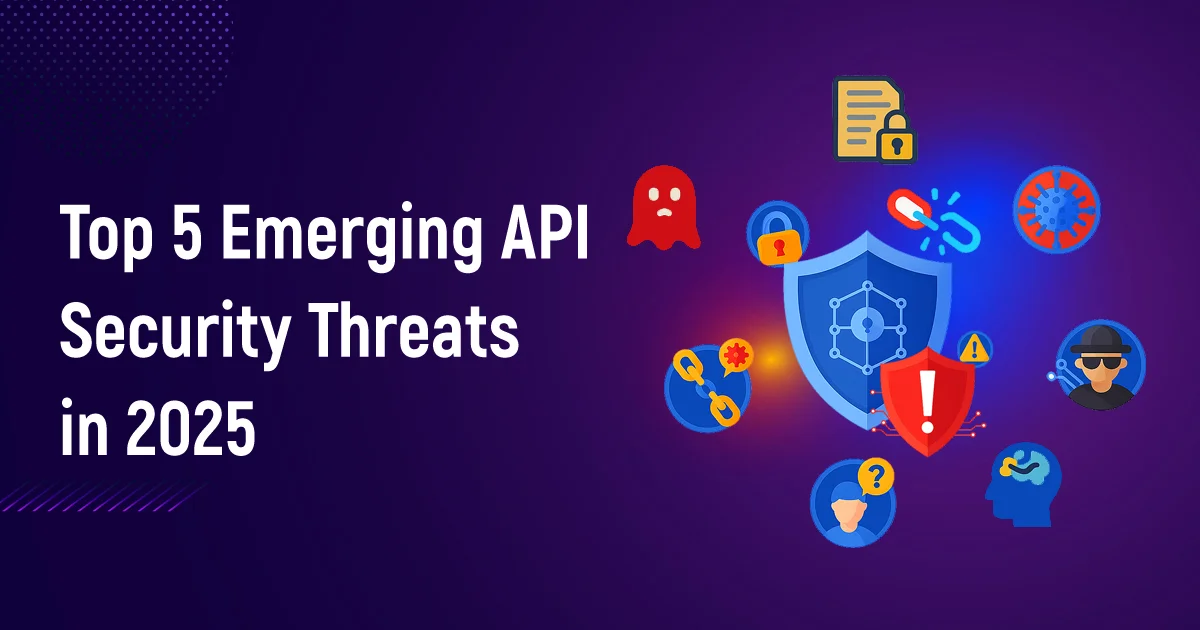
The Evolving API Threat Landscape
APIs have become the foundation of digital transformation, facilitating quick and scalable integration across various platforms. However, with the rise in API usage comes an increase in associated risks. Gartner predicts that by 2026, API abuse will be the most common attack vector, serving as a critical reminder for security teams facing an overwhelming number of vulnerabilities.
Prophaze is at the forefront of tackling this challenge, employing AI-driven detection for real-time, adaptive protection. This article delves into the top five emerging threats to API security for 2026 and discusses how solutions like Prophaze can safeguard your ecosystem.
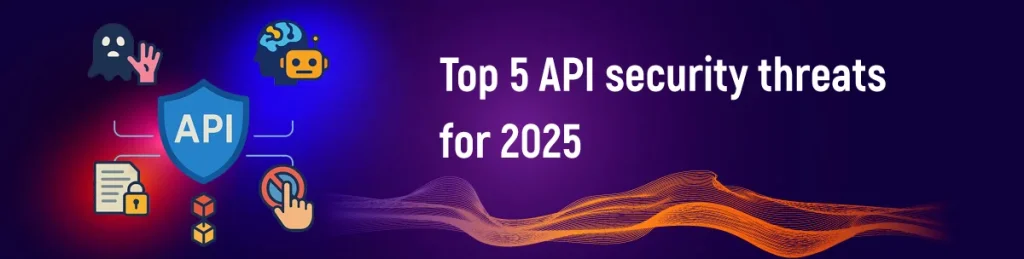
Top 5 API security threats for 2026
Shadow & Zombie APIs
The Risk:
Shadow APIs (undocumented and unmanaged) and zombie APIs (outdated but still accessible) introduce hidden vulnerabilities. These endpoints often go unnoticed and unprotected, providing attackers with easy access points.
Why It Matters in 2026:
As development teams accelerate delivery cycles, API governance often lags behind. A 2024 study revealed that 42% of organizations discovered shadow APIs only after a security incident.
Prophaze Mitigation:
- AI-powered discovery of undocumented and legacy APIs.
- Continuous traffic monitoring to identify outdated or unauthorized endpoints.
- CI/CD integration to block unauthorized APIs during deployment.
- Real-time alerting and analytics for suspicious API activity.
Eliminate blind spots by ensuring every API is visible and accountable.
AI-Driven Bot Attacks
The Risk:
Attackers are deploying intelligent bots capable of mimicking human behavior to bypass standard protections. These bots execute credential stuffing, data scraping, and abuse API functionalities at scale.
Why It Matters in 2026:
AI-powered bots can learn and adapt quickly, making them harder to detect. Bot-related API traffic surged 372% in 2024, especially affecting financial services, e-commerce, and SaaS platforms.
Prophaze Mitigation:
- Behavioral fingerprinting to differentiate bots from real users.
- Intent-based request analysis.
- Adaptive human verification with minimal user disruption.
- Integration with global threat intelligence.
- Dynamic rate limiting and bot traffic throttling.
Combat AI with AI—Prophaze adjusts in real-time to identify and thwart malignant automation.
Excessive Data Exposure
The Risk:
APIs that return more data than necessary may expose sensitive information such as personally identifiable information (PII), access tokens, and internal system details.
Why It Matters in 2026:
As privacy regulations grow more stringent, unintentional data exposure can lead to severe financial penalties and reputational damage. In 2024, 63% of API-related breaches involved excessive data exposure.
Prophaze Mitigation:
- Automatic detection and classification of sensitive fields.
- Real-time response filtering to limit data exposure.
- Anomaly detection in data access behavior.
- Data masking and tokenization for compliance.
Share only what is essential—Prophaze enforces the principle of minimal exposure.
API Supply Chain Vulnerabilities
The Risk:
Third-party APIs integrated into your application ecosystem may have weaker security controls. If compromised, they can serve as a backdoor to your environment.
Why It Matters in 2026:
Organizations use an average of 89 third-party APIs, many of which lack visibility or formal vetting. API-based supply chain attacks now account for 37% of breaches.
Prophaze Mitigation:
- Continuous behavioral monitoring of third-party APIs.
- Risk scoring for external and partner API interactions.
- Zero-trust policy enforcement on every API call.
- Sandboxing and rate limits to contain potential damage.
Trust but verify—Prophaze enhances visibility and control over your API supply chain.
Business Logic Abuse
The Risk:
Business logic attacks exploit the intended functionality of APIs rather than technical flaws. Attackers manipulate workflows, abuse processes, or access data they shouldn’t have.
Why It Matters in 2026:
These attacks are difficult to detect with traditional security tools because they don’t involve code-level vulnerabilities. Business logic abuse accounted for 42% of API breaches in 2024 and often went undetected for over six months.
Prophaze Mitigation:
- Baseline modeling of normal user behavior and workflows.
- Sequence analysis to detect abnormal request patterns.
- Privilege escalation monitoring and misuse detection.
- Custom rules tailored to your business workflows.
Understand intent, rather than just syntax, to identify what others might overlook.
Why Prophaze? Adaptive Security for Evolving Threats
Prophaze offers a comprehensive API security platform purpose-built for modern cloud-native applications. Its AI-first architecture provides real-time, adaptive protection that evolves with your API ecosystem.
Key Capabilities:
- AI and machine learning for zero-day threat detection.
- Full lifecycle protection from API development to retirement.
- Seamless integration with CI/CD pipelines and developer workflows.
- Actionable dashboards and compliance-ready reporting.
- Minimal performance impact with intelligent traffic routing.
Secure Your API Ecosystem Proactively
The API landscape in 2026 presents both challenges and dangers. From shadow APIs to intelligent bots and business logic attacks, the threats are increasingly sophisticated, scalable, and severe. Prophaze enables organizations to not only respond to threats but also to foresee and neutralize them through adaptive protection driven by AI and deep behavioral insights. Ensure the security of your APIs, safeguard your data, and strengthen customer trust.
Learn More About Prophaze API Security