A CASB can be deployed either on premises or in the cloud. Most of the CASB deployments are SaaS-based. There are mainly three types of CASB deployments.
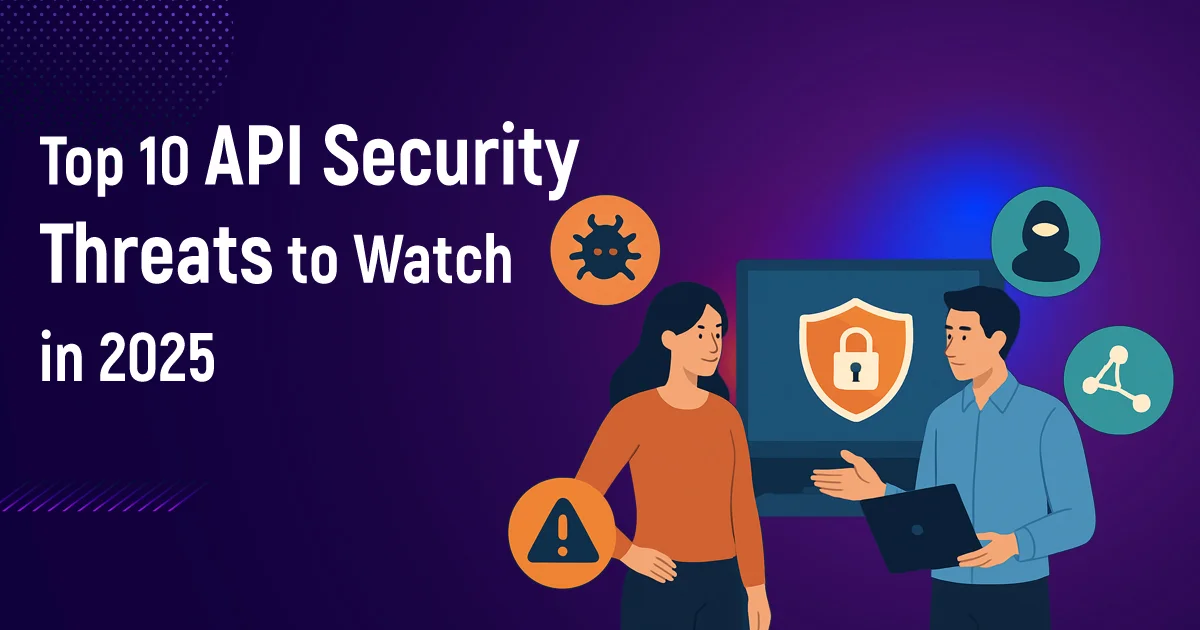
According to Gartner, API abuses are becoming the most frequent attack vector, expected to dominate cybersecurity concerns in 2025.
In this blog, we cover the top 10 API security threats to monitor in 2025 — and how to secure your systems with proven, expert-backed countermeasures.

1. Shadow and Zombie APIs
Why it's a threat:
Shadow APIs (those that are unregistered or undocumented) and zombie APIs (deprecated yet still operational) represent hidden vulnerabilities. They evade detection by standard monitoring tools and are frequently overlooked — until attackers exploit them.
Prevention:
- Automate API discovery across environments
- Decommission deprecated APIs
- Use versioning to track updates
- Integrate into your CI/CD scanning
2. Broken Authentication & Authorization
Why it's a threat:
Inadequate login systems, improperly set up tokens, and misconfigured access controls present a lucrative opportunity for attackers targeting APIs. They can either fake user identities or gain higher privileges to reach sensitive resources.
How to Stay Safe:
- Use OAuth 2.0 and secure token handling
- Enforce multi-factor authentication (MFA)
- Apply RBAC and periodic access audits
- Track login anomalies in real time
3. Injection Attacks (SQL, NoSQL, Command)
The Threat:
Attackers exploit weakly validated inputs, from SQL injections to command injections, to manipulate or take control of backend systems. APIs are particularly at risk because they interact directly with databases.
How to Stay Safe:
- Sanitize input fields rigorously
- Use parameterized queries
- Implement WAF rules for APIs
- Regularly scan for injection vulnerabilities
4. Excessive Data Exposure
The Threat:
APIs that provide excessive data, even if unintentional, can expose sensitive information like personally identifiable information (PII) or internal business processes.
How to Stay Safe:
- Apply data minimization policies
- Mask or encrypt PII fields
- Validate and filter API response schemas
- Monitor outbound API traffic
5. DDoS Attacks Targeting APIs
The Threat:
APIs represent significant DDoS targets as they support essential functionality. A sudden surge of requests can severely disrupt services.
How to Stay Safe:
- Implement rate limiting and throttling
- Enable API caching where feasible
- Detect request spikes with behavioral AI
- Filter malicious traffic using intelligent WAFs
6. Lack of End-to-End Encryption
The Threat:
Unencrypted API traffic is vulnerable to eavesdropping, man-in-the-middle (MITM) attacks, and data leaks while being transmitted.
How to Stay Safe:
- Enforce HTTPS with TLS 1.3
- Encrypt sensitive payloads
- Block non-encrypted API traffic by default
- Test for SSL misconfigurations regularly
7. API Misconfigurations
The Threat:
isconfigured APIs, like overly permissive CORS settings, default credentials, or detailed error messages, put applications at unnecessary risk.
How to Stay Safe:
- Harden API endpoints with least-privilege settings
- Secure default credentials
- Restrict CORS with specific origins
- Automate config scans in your pipeline
8. Inadequate API Observability
The Threat:
Without visibility, you cannot protect your assets. Insufficient insight into API behavior hinders incident response and allows threats to remain unnoticed.
How to Stay Safe:
- Enable detailed request/response logging
- Centralized metrics and alerts
- Track usage anomalies with threat intelligence
- Integrate with SIEM for better context
9. Insecure API Development Practices
The Threat:
APIs created without adequate security testing frequently hold significant vulnerabilities that become apparent only in production, where repercussions can be severe.
How to Stay Safe:
- Embed security tests into CI/CD
- Use static and dynamic analysis tools
- Simulate attack scenarios during QA
- Train dev teams on secure coding
10. Compliance and Regulatory Risks
The Threat:
APIs managing sensitive information, such as financial and health records, need to adhere to regulations like GDPR, HIPAA, and PCI-DSS. Breaching these regulations can result in fines, lawsuits, and a breakdown of trust.
How to Stay Safe:
- Encrypt and log all regulated API data
- Monitor for compliance breaches in real time
- Maintain audit trails
- Keep policies updated with regulatory changes
Don’t Let Your APIs Be the Weakest Link
In 2025, API security will make or break your digital trust. By recognizing these threats and proactively mitigating them, businesses can safeguard APIs while maintaining agility.
Need to strengthen your API defenses? Start by auditing your current API landscape and aligning it with these emerging risk areas. The future is API-driven — make sure it’s also secure. To know more solutions, check Prophaze.
Prophaze delivers AI-powered API security, combining WAF, DDoS mitigation, behavioral detection, and Kubernetes-native protection — all in one cloud-native platform.