In today’s interconnected world, securing web applications is not just optional; it’s essential. Web Application Firewalls (WAFs) serve as the front line of defense against various threats, including traditional injection attacks, modern bot activities, and zero-day vulnerabilities. While F5 has been a foundational player in this arena, the rise of cloud-native architectures, microservices, and agile DevOps practices has led many organizations to seek more agile, intelligent, and cloud-friendly WAF solutions.
If you are considering WAF options in 2025, this guide will assist you in discovering innovative alternatives. It particularly highlights why Prophaze is at the forefront of next-generation application security.
Why Organizations Are Seeking Alternatives to F5 WAF?
F5 offers a strong and popular WAF solution that many organizations appreciate, but it’s important to note that it might not be the perfect fit for every modern enterprise. Some commonly faced challenges reported by organizations include:
- Complicated configurations and substantial deployment burdens.
- Elevated licensing and support expenses.
- Limited out-of-the-box support for microservices and APIs.
- More challenging user experience.
In today’s landscape, security teams need agility, automation, and thorough integration with DevSecOps pipelines. With the increasing complexity of threats and the transition of workloads to dynamic settings such as Kubernetes and containers, it is evident that adaptive, AI-first WAF platforms are essential.
The Best F5 WAF Alternatives in 2025
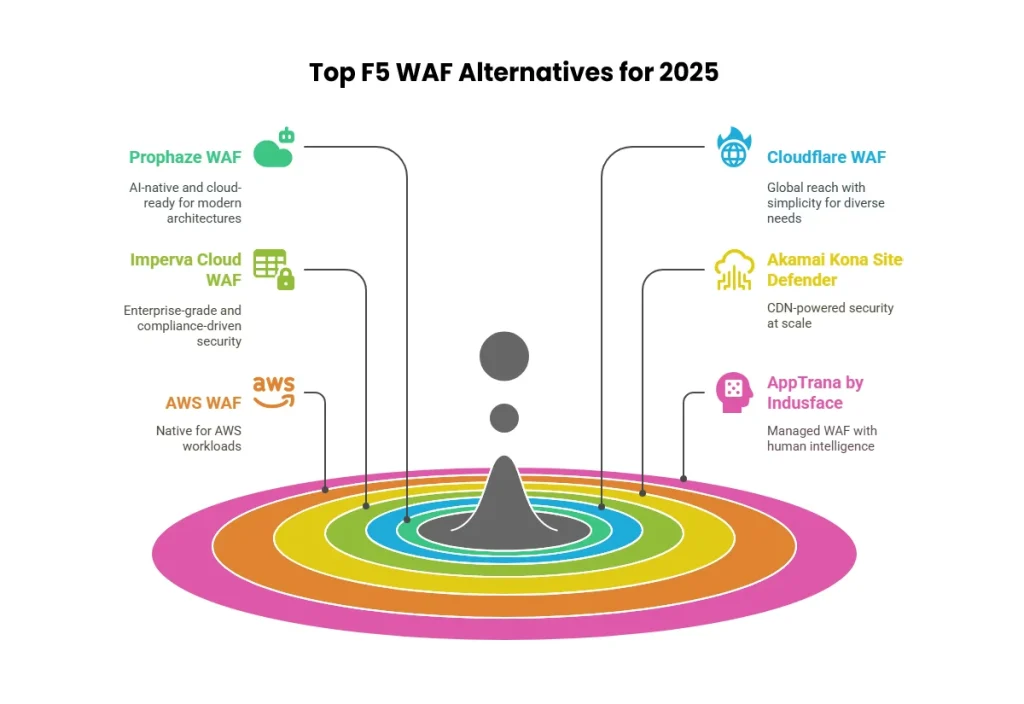
Here are six cutting-edge WAF platforms offering strong alternatives to F5, each bringing unique advantages for cloud-native, API-centric, and high-scale environments.
Prophaze WAF – AI-Native, Built for the Cloud-Native Era
Prophaze delivers an advanced Web Application & API Protection (WAAP) platform tailored for Kubernetes and containerized workloads. With built-in AI/ML threat detection, zero-touch deployment, and robust API security, it’s ideal for teams looking to future-proof their application defenses.
Key Strengths:
- AI-Powered Defense: Learns application behavior to detect zero-day and evasive threats in real time.
- Advanced API Security: Includes automatic API discovery, OWASP API protection, and live anomaly detection.
- Cloud-Native Architecture: Seamlessly integrates with Kubernetes, microservices, and container stacks.
- Zero-Config Deployment: Smart automation reduces manual policy tuning and patch management.
- Lightweight & Scalable: Operates with minimal resource footprint and scales with infrastructure needs.

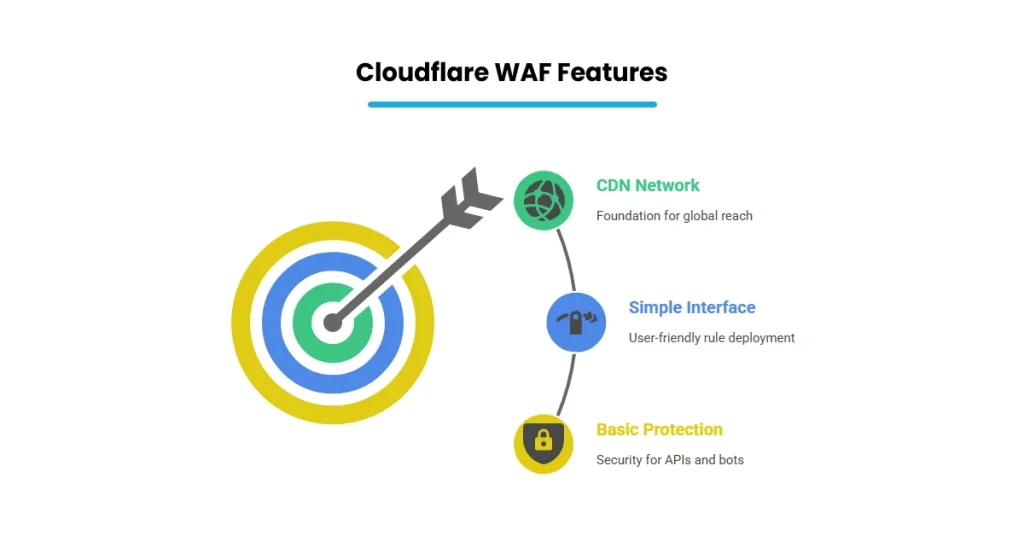
Cloudflare WAF – Global Reach with Simplicity
Cloudflare’s WAF is integrated into its vast edge network, providing both enhanced performance and security. It attracts teams seeking quick deployment along with robust bot and DDoS protection.
Key Strengths:
- Leveraging one of the largest CDN networks globally.
- User-friendly interface enabling swift rule implementation.
- Fundamental protection for APIs and bot traffic.
Imperva Cloud WAF – Enterprise-Grade and Compliance-Driven
Imperva is well-suited for large enterprises with high compliance and data protection needs. It offers rich threat intel and detailed security analytics.
Key Strengths:
- Real-time threat feeds and traffic intelligence.
- Comprehensive compliance support (PCI DSS, HIPAA, etc.).
- Detailed logging and reporting features.

Akamai Kona Site Defender – CDN-Powered Security at Scale
Akamai utilizes its extensive global CDN to enhance resilience against DDoS attacks and ensure low-latency threat mitigation. This solution is particularly suited for high-traffic enterprises that are part of the Akamai ecosystem.
Key Strengths:
- Comprehensive scale for volumetric Distributed Denial of Service (DDoS) protection.
- Seamless integration with Akamai’s performance enhancement tools.
- Recognized for safeguarding mission-critical web assets.

AWS WAF – Native for AWS Workloads
AWS WAF integrates tightly with AWS-native services like CloudFront, ALB, and API Gateway—making it a convenient choice for teams fully invested in the AWS environment.
Key Strengths:
- Pay-as-you-go model.
- Effortless integration with AWS-native services.
- Availability of curated rule sets through AWS Marketplace.

AppTrana by Indusface – Managed WAF with Human Intelligence
AppTrana offers a fully managed WAF solution with human-led monitoring, DAST, and continuous vulnerability scanning.
Key Strengths:
- 24/7 managed service with pen-testing support.
- Reduction in false positives with manual tuning.
- Emphasis on holistic application protection.

Feature Comparison Table
Let’s examine the comparisons among these various platforms and their features.
What to Look for in an F5 WAF Alternative
When assessing WAFs, focus on features that correspond with your organization’s security model and development needs practices:
- Proactive Threat Detection: AI/ML assistance in recognizing new and evolving attack vectors.
- API-Centric Security: Complete visibility for APIs, along with protection and rate limiting.
- Cloud-Native Integration: Smooth deployment in Kubernetes and for containerized workloads.
- Ease of Deployment: User-friendly interface, automation features, and minimal overhead.
- Comprehensive DDoS/Bot Mitigation: Multi-layered defenses incorporating traffic intelligence.
- Compliance Support: Resources for PCI DSS, HIPAA, GDPR, and more.
- Transparent Pricing & Support: No hidden costs for essential features.

Prophaze: Not Just an Alternative—A Strategic Upgrade
While there are many solid WAF options available, few are built specifically for the dynamic, distributed, API-driven world we now operate in. Prophaze distinguishes itself with:
- AI-First Threat Intelligence
- Built-In DevSecOps Readiness
- Zero-Config Automation at Scale
Whether you’re deploying web apps across hybrid environments or securing critical APIs, Prophaze adapts and scales with your needs—securing today while preparing you for tomorrow.