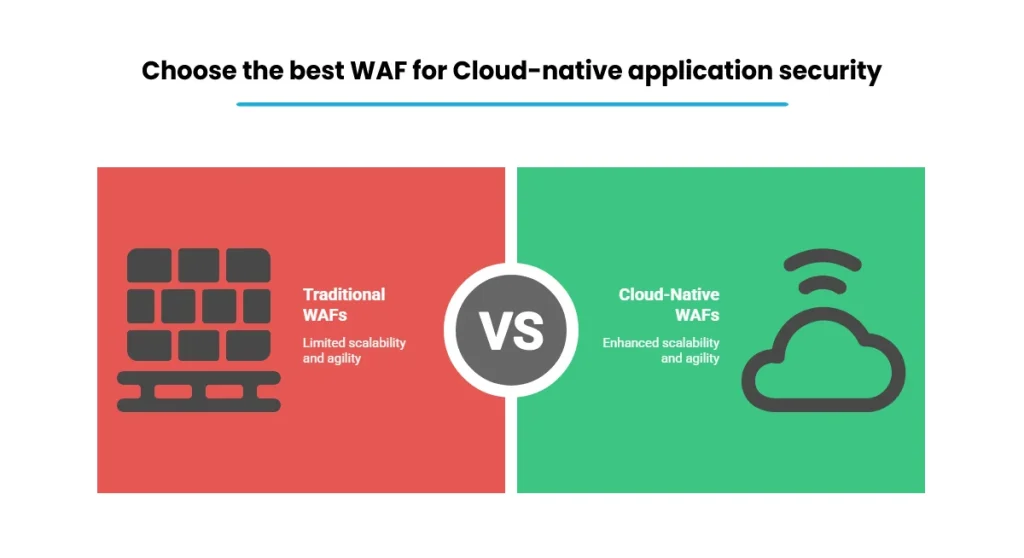
As businesses rapidly adopt cloud-native architectures—powered by Kubernetes, containers, and microservices—securing these highly dynamic environments has become more complex than ever. Traditional Web Application Firewalls (WAFs) struggle to keep up with the scale, automation, and agility demanded by today’s modern applications.
This shift has catalyzed the emergence of cloud-native WAF solutions, purpose-built for continuous deployment environments and API-first design models.
Why Cloud-Native Security Requires a New WAF Approach
Modern application environments are dynamic. IP addresses frequently change, services automatically scale, and new APIs are deployed every day. Traditional WAFs, built for monolithic or older infrastructures, can create friction or even leave security gaps.
Essential characteristics to seek in a cloud-native WAF are:
- Elastic Scalability: Automatically adapt to traffic surges and deployments.
- API-Centric Protection: Integrated defense for REST, GraphQL, and internal APIs.
- CI/CD Integration: Seamlessly blend with your automated pipelines and security testing workflows.
- Real-Time Intelligence: Utilize global and contextual threat data feeds.
- Automation-First Design: Minimize manual rule creation and threat response efforts.
- Low False Positive Rates: Maintain security while ensuring legitimate traffic flows uninterrupted.

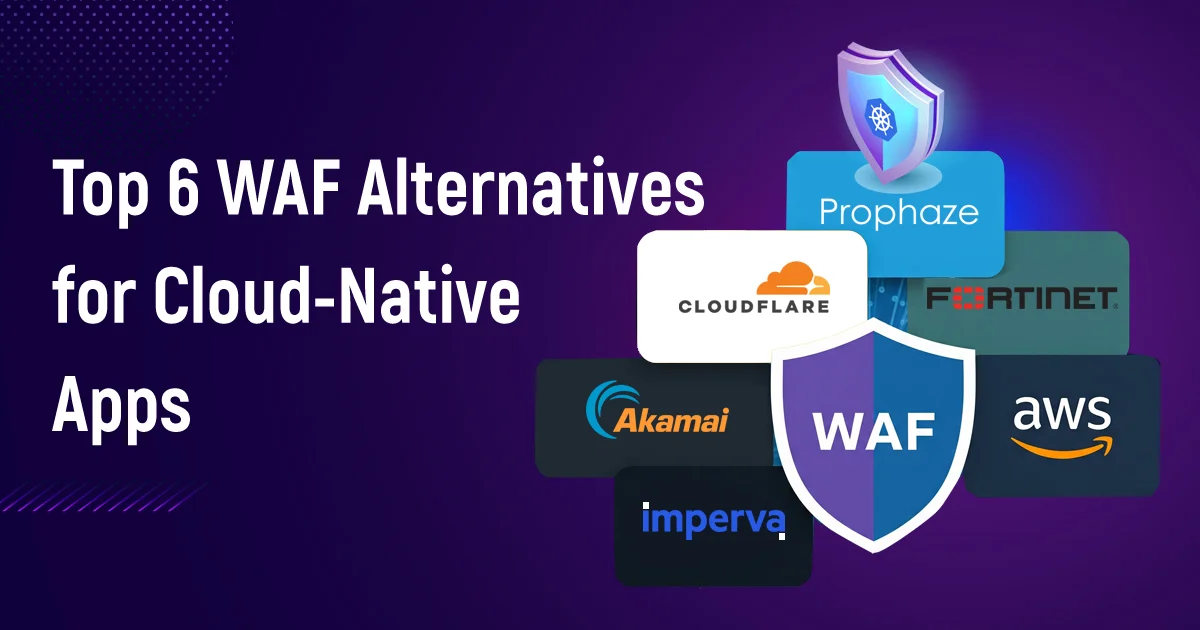
Top 6 WAF Solutions for Cloud-Native Applications
Prophaze WAF — Purpose-Built for the Cloud-Native Era
Prophaze delivers a WAF built from the ground up for Kubernetes, containers, and cloud-native stacks. Unlike retrofitted WAFs, it’s natively aligned with DevSecOps workflows and API-first security.
Key Differentiators:
- AI-Driven Protection: Employs machine learning to identify emerging threats such as zero-days, bots, and DDoS attacks.
- Kubernetes-Native Integration: Provides detailed controls within pods and namespaces, making it perfect for DevOps teams.
- Full API Lifecycle Security: Involves discovery, schema enforcement, and automated protection against attacks for both public and private APIs.
- DevSecOps Ready: Integrates with CI/CD tools to facilitate proactive policy updates and inline security testing.
- Automated Policy & Response: Modifies defenses in real time, minimizing administrative workload.
- Minimal False Positives: Adapts based on context and behavior rather than relying solely on static rules.
Cloudflare WAF — Edge-Based Protection with Global Reach
Cloudflare is recognized for its worldwide CDN and DDoS protection. Its WAF enhances this by safeguarding web applications with edge-based filtering.
Strengths:
- Outstanding performance at the edge
- Strong DDoS mitigation
- Straightforward deployment
Cloud-Native Considerations:
Ideal for extensive web protection instead of detailed Kubernetes or container security. Lacks granularity for pod-level policies.
Akamai Site Defender — Enterprise-Grade but Heavyweight
Akamai provides extensive bot mitigation and threat intelligence, often preferred by large-scale enterprises with complex workloads.
Strengths:
- Comprehensive threat intelligence gathered from Akamai’s worldwide telemetry.
- Integration with Akamai’s extensive security suite.
Cloud-Native Considerations:
Could necessitate an extensive setup for microservice environments. More focused on perimeter defense rather than internal mesh security.
AWS WAF — Ideal for AWS-Centric Workloads
AWS WAF seamlessly integrates for users well entrenched in the AWS ecosystem, enabling customizable rules.
Strengths:
- Integrated with AWS services such as CloudFront, API Gateway, and ALB.
- Flexible pay-as-you-go pricing.
Cloud-Native Considerations:
Requires extensive configuration. Enhanced security typically needs supplementary services (e.g., Shield, Firewall Manager). Minimal built-in ML-driven threat detection.
Imperva Cloud WAF — Strong on Compliance and Data Protection
Imperva prioritizes data security by providing sophisticated analytics and tools centered on compliance.
Strengths:
- Integrated compliance reporting.
- Robust bot management.
Cloud-Native Considerations:
There is a steeper learning curve in dynamic, automated DevOps settings, which may not align as seamlessly with Kubernetes-native deployment models.
Fortinet FortiWeb — Versatile, but Legacy-Oriented
FortiWeb offers support for both virtual and hardware appliances, ensuring layered security for hybrid networks.
Strengths:
- A component of Fortinet’s comprehensive security fabric.
- Accommodates various deployment options (on-premises, cloud, virtual).
Cloud-Native Considerations:
Legacy design is evident in orchestration and support for microservices. It is more appropriate for traditional applications transitioning to a hybrid cloud environment.
WAF Feature Comparison for Cloud-Native Security
How to Choose the Right WAF for a Cloud-Native Applications
When assessing WAFs for cloud-native settings, organizations ought to concentrate on:
- Native support for Kubernetes and containers.
- Comprehensive API protection throughout its lifecycle.
- Compatibility with Automation and DevSecOps.
- Scalability without sacrificing performance.
- Demonstrated AI capabilities for detecting unknown threats.
Although many vendors provide effective WAFs, only a select few combine real-time intelligence, cloud-native design, and streamlined DevOps collaboration.
Why Prophaze is the Best WAF for Cloud-Native Security
Prophaze is not simply another WAF; it is a security framework designed specifically for the challenges posed by cloud-native applications. Whether securing east-west traffic in Kubernetes clusters or implementing zero-trust policies for APIs, Prophaze delivers the intelligence, automation, and precision required by modern environments.
Whether you’re operating microservices at scale or managing hybrid-cloud deployments, Prophaze ensures future-proof application security without complexity.